
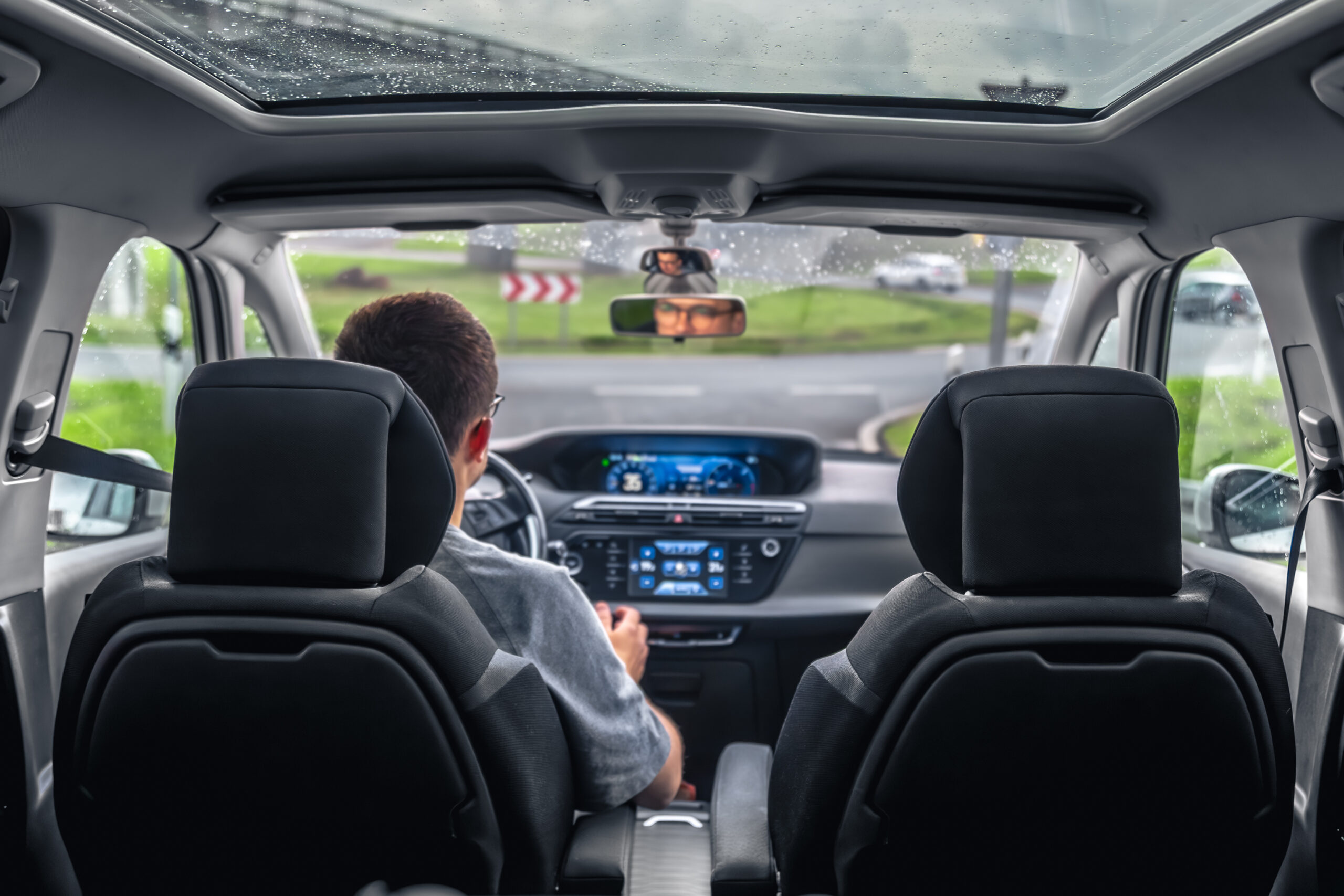
Full APA Citation: Hurwitz, D. S., Pradhan, A., Fisher, D. L., Knodler, M. A., Muttart, J. W., Menon, R., & Meissner, U. (2010). Backing collisions: A study of drivers’ eye and backing behaviour using combined rear-view camera and sensor systems. Injury Prevention, 16(2), 79–84. doi:10.1136/ip.2009.021535.
Introduction
Backing-related crashes represent a significant safety concern, particularly for young children who are disproportionately affected. Statistics indicate that approximately 200 of the 2,500 reported injuries to children under 15 each year result in fatalities. The rise of high-profile vehicles, such as SUVs and minivans, has exacerbated this issue by providing drivers with a limited rearward view.
While parking aid technologies exist, their success in preventing crashes has been limited. This study aimed to investigate why rear-view cameras have shown only moderate efficacy and whether integrating them with sensor-based audible warnings could improve driver performance. Researchers hypothesized that the limited success of cameras was due to driver underutilization and that audible alerts could prompt better visual scanning.
Methodology
The study employed a non-randomized controlled field experiment conducted at a parking facility at UMass Amherst. The participant pool consisted of 46 drivers (33 men, 13 women) with an average of over nine years of driving experience. Participants were divided into an experimental group (36 drivers) provided with a combined sensor-camera system and a control group (10 drivers) using a vehicle with no parking aids.
All participants completed 16 parking trials over two days. During these trials, researchers introduced unexpected crash scenarios by surreptitiously placing a decoy object in the vehicle’s blind spot or remotely activating the sensor system. To track behavior, drivers wore an ASL Mobile Eye tracker, which recorded eye fixations and glance patterns. Researchers specifically analyzed the first five glances after shifting into reverse and the first three glances following an audible alarm.
Results
The findings revealed that drivers rarely utilize rear-view cameras spontaneously; only 20% of participants looked at the camera display before beginning to back up. However, visual engagement with the technology was highly effective: 88% of drivers who looked at the camera avoided a crash, whereas nearly all drivers who failed to look (96.3%) collided with the decoy.
Data also indicated a significant “desensitization” effect over time. Initial camera usage dropped from 57.4% in the first trial to just 15.7% by the sixth trial. Crucially, the study found that audible sensors act as a vital prompt; 46% of drivers who did not initially look at the camera did so immediately after hearing the sensor warning. The researchers concluded that while cameras are powerful tools for crash mitigation, their efficacy depends on consistent driver habit or the presence of an integrated sensor system to draw the driver’s attention to the display at the critical moment.
References
- Fenton, S., Scaife, E., Meyers, R., et al. (2005). The prevalence of driveway back-over injuries in the era of sports utility vehicles. J Pediatr Surg, 40, 1964–8.
- Centers for Disease Control and Prevention (CDC). (2005). Nonfatal motor-vehicle-related backover injuries among children–United States, 2001–2003. MMWR Morb Mortal Wkly Rep, 54, 144–6.
- Patrick, D., Bensard, D., Moore, E., et al. (1998). Driveway crush injuries in young children: a highly lethal, devastating, and potentially preventable event. J Pediatr Surg, 33, 1712–15.
- Murphy, F., White, S., Morreau, P. (2002). Driveway-related motor vehicle injuries in the paediatric population: a preventable tragedy. J NZ Med Assoc, 115, 1–8.
- Agran, P., Winn, D., Anderson, C. (1994). Differences in child pedestrian injury events by location. Pediatrics, 93, 284–8.
- National Highway Traffic Safety Administration. (2006). Vehicle backover avoidance technology study. Washington DC, USA: National Highway Traffic Safety Administration, U.S. Department of Transportation; Nov. 2006 Report to Congress.
- McLaughlin, S. B., Hankey, J. M., Green, C. A., et al. (2003). Driver performance evaluation of two rear parking aids. Conference on Enhanced Safety of Vehicles.
- Llaneras, R. E., Green, C. A., Keifer, R. J., et al. (2005). Design and evaluation of a prototype rear obstacle detection and driver warning system. Hum Factors, 47, 199–215.
To better understand this, think of the rear-view camera like a fire extinguisher. It is an incredibly effective tool for stopping a disaster, but it only works if you remember to reach for it. The audible sensor acts like a smoke alarm—it doesn’t put out the fire itself, but it screams at you to grab the extinguisher before it’s too late.