
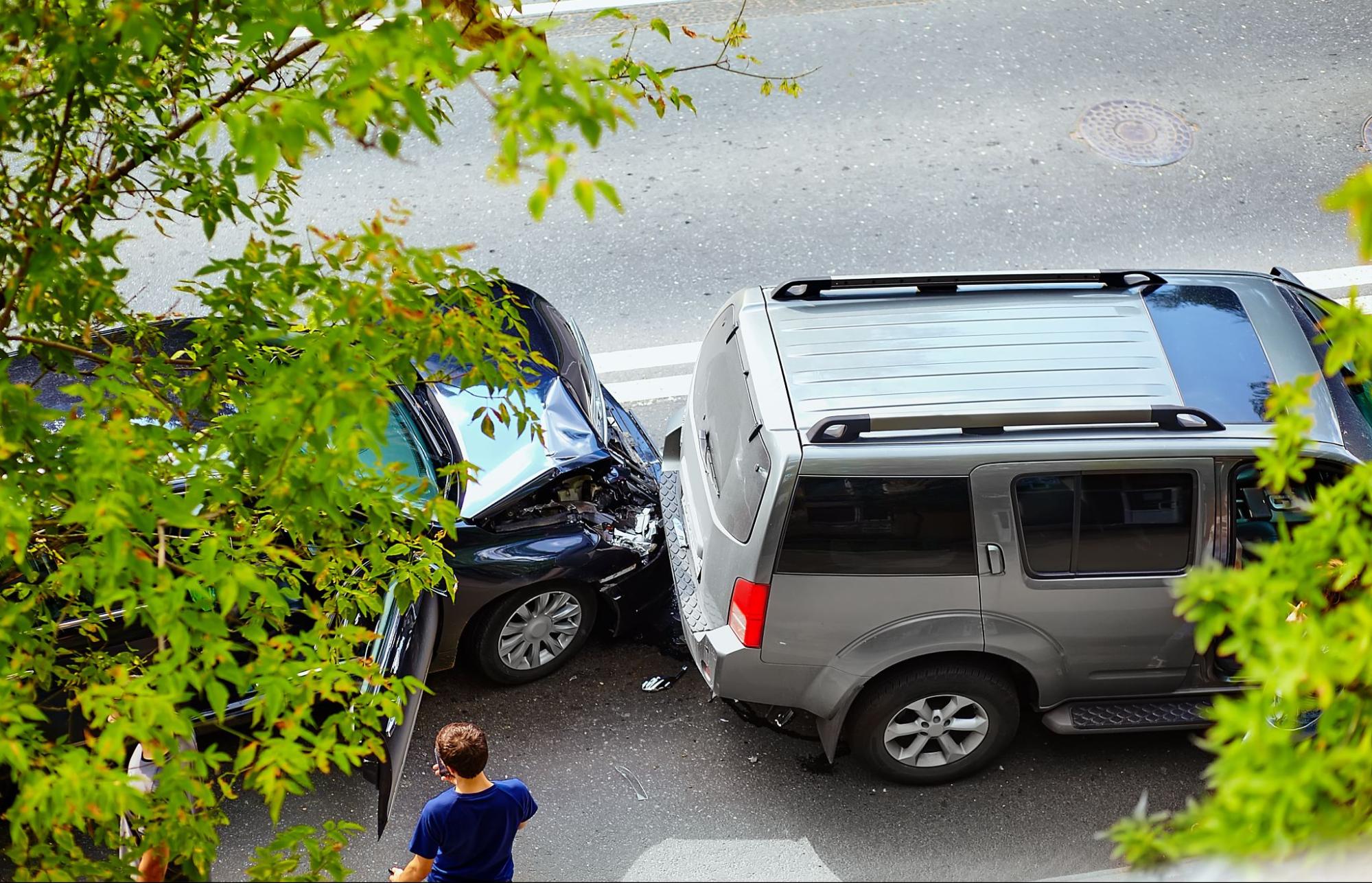
Summary: Accident reconstruction involves more than analyzing vehicle physics, it requires understanding how real drivers perceive, recognize, and respond to hazards. This blog explores the biggest challenges in crash reconstruction and explains why human factors research is essential for producing accurate, defensible, and evidence-based conclusions.
Two crash analysts can study the same crash, review the same video, and measure the same skid marks, yet reach very different conclusions about what the driver should have done. How is that possible when the physical evidence doesn’t change?
The answer lies in the part of accident reconstruction that is hardest to measure: the human in the system.
A driver is not a machine, and a pedestrian is not a fixed object. People detect hazards, process information, make decisions, and respond at different speeds depending on what they could see, what they expected, and how much time they had. This variability is where crash analysis becomes genuinely difficult, and where strong work separates itself from convenient assumptions.
The best way to understand the challenges of reconstruction is to walk through the questions a careful analyst must answer, in roughly the order they arise. At each step, there’s a tempting shortcut and a more honest, more difficult path.
First Question: How Long Did the Driver Have?
Every analysis hinges on time. Not the time the investigator spends on the case, but the sliver of time the driver actually had.
An accident reconstruction expert might spend hours, even days, picking apart a few seconds of a crash, freezing every frame and replaying it from every angle. But the driver didn’t have that luxury. They had seconds, maybe less.
The whole point of any honest traffic accident investigation is to figure out what information was available to the driver in that tiny window, not what becomes obvious after hours of review.
The shortcut is to treat everything the investigator can eventually see as something the driver should have seen. After enough replays, the hazard looks obvious. But the driver got one pass, in real time, with no warning about where to look.
The first challenge of traffic accident investigation is resisting the certainty manufactured by hindsight and rebuilding the moment as it was lived.
Second Question: When Could the Driver Recognize the Hazard?
Seeing and recognizing are not the same thing.
A pedestrian can be physically present on the road well before a driver can recognize them as a hazard requiring action. Recognition is what starts the clock on response, and it depends on conditions, especially at night.
Nighttime recognition depends on several factors, sometimes called CLAPS: Contrast, Lighting, Anticipation, Pattern, and Size. If any one goes to zero, recognition can drop sharply.
A pedestrian in dark clothing on an unlit rural road has almost no contrast until headlights supply enough information to register them. Add glare from oncoming traffic, rain, or windshield tint, and the moment of recognition slides later still.
Get this step wrong, and every subsequent calculation is built on an early or late starting point.
This is also why the most common misconception in the field is so dangerous: assuming a driver responded slowly because a crash occurred. Some crashes are avoidable for most drivers. Some are avoidable only for the fastest. And some are not avoidable by anyone, even an alert, sober, attentive driver, because the hazard never became recognizable in time.
The question is never simply “Why didn’t they stop?” It’s “When could they reasonably have known there was something to stop for?”
Third Question: How Does This Driver Compare to Real Drivers?
Imagine two drivers facing two different hazards.
The first sees a car cut sharply in front of them, something they’ve experienced dozens of times. They respond quickly because the situation is familiar and the information is clear.
The second is on a dark, remote road at night when a pedestrian in dark clothing suddenly appears. The hazard is hard to make out and totally unexpected, and by the time their brain catches up, there’s barely any distance left to do anything about it.
Both drivers might be attentive, alert, and sober, yet their response times will differ dramatically, and not because one is a better driver. The two factors that consistently shape how fast a driver responds are the quality of information available and the probability that the hazard will occur. Clearer information and more common scenarios produce faster responses; poor information and rare events produce slower ones.
Additionally, this is why leaning on the “average driver” can quietly distort an analysis. Average sits near the 50th percentile, which means that if a scenario is one only the average driver can avoid, roughly half the population couldn’t avoid it at all. Sound reconstruction accounts for the full range of human behavior, not just the midpoint.
Fourth Question: What Happened Before the Emergency?
Most reports begin and end at the emergency itself. However, the most overlooked evidence often lives in the moments before.
Analysts tend to focus only on the emergency response event, but it’s important to take a step back and look at everything leading up to the collision. Experienced drivers make small adjustments when they sense developing risk, such as easing off the throttle, shifting position, preparing, without ever reaching the point of a hard brake.
A driver who misses those cues may arrive at the emergency with no good options left. If you start the analysis at the final second, you erase the part of the story that explains the rest of it.
Fifth Question: Does the Math Account for the Driver?
By now, a pattern is clear: even the parts of reconstruction that look purely mechanical depend on human behavior. Stopping distance is the perfect example.
Stopping distance has two components. The first is the distance covered while the driver is still recognizing and reacting, during which the vehicle hasn’t lost any speed at all. At 68 mph, that’s roughly 100 feet per second, so even a small delay can devour the stopping room.
The second is the braking distance itself, and even this isn’t fixed. Drivers don’t always brake to the maximum that the vehicle and road allow. Some brake hard, some hesitate, some steer instead. Rain, worn tires, and roadway grade widen the range further.
A simplified formula that assumes one response time and one braking force will reliably miss the truth, sometimes badly. The numbers only mean something when they’re tied to how a real driver behaved.
Where the Tools Fall Short, and How Response Helps
Most reconstruction software models the crash, not the driver. These tools are excellent at the mechanical story. However, nearly all software to date doesn’t account for what drivers do when facing a similar scenario.
Response was designed to close this gap.
Instead of modeling the collision, it models the human in it, drawing on a framework of more than 1,000 published, peer-reviewed studies covering response times, braking and steering behavior, recognition distances, and nighttime visibility factors.
Rather than spending hours combing literature for studies that fit a scenario, an analyst narrows the data by crash type, hazard, visibility, and driver task, then compares the subject driver against what real drivers have done in matching conditions. And every figure is fully traceable to its source, so any independent expert can verify it.
In court, a jury can’t be expected to know how a typical driver behaves in a nighttime pedestrian crash. Response gives them a research-grounded baseline, letting them judge whether the subject driver’s response fell inside or outside the normal range.
The Takeaway
The challenges of accident reconstruction nearly all flow from the same source: a person is not a machine, and the moment they lived through is not the moment an investigator studies afterward. Treating drivers like fixed values, judging them through hindsight, ignoring the lead-up, and trusting physics alone are different symptoms of the same underlying mistake.
At the Driver Research Institute, we believe better crash analysis begins with better human factors analysis. When reconstruction accounts for how real drivers perceive, decide, and respond, the conclusions become both more accurate and far easier to defend.
If you’d like to see how Response can strengthen your next vehicle accident reconstruction, get in touch with DRI.