
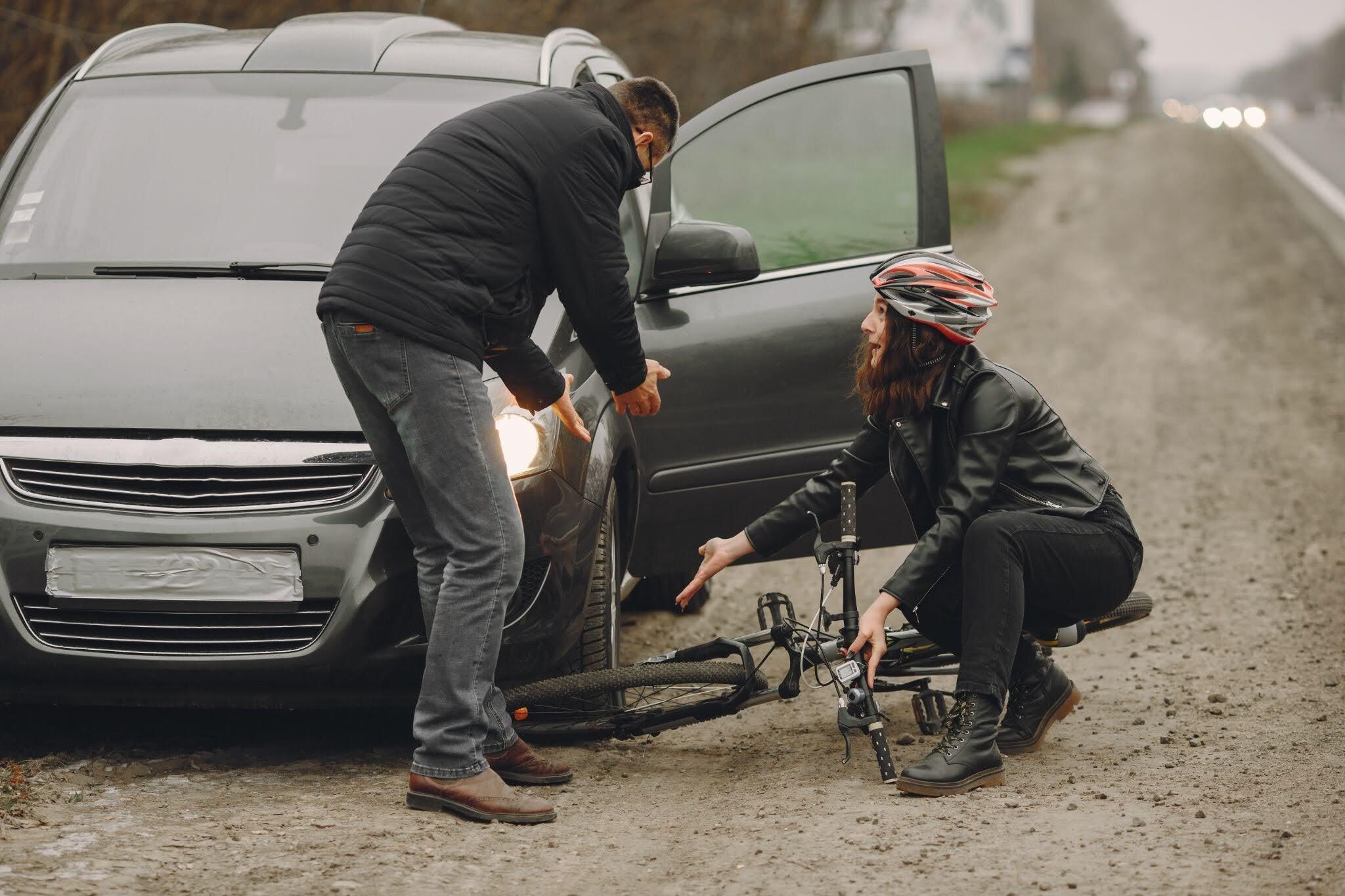
Modern reconstructionists work with tools that barely existed a decade ago, including advanced crash simulations, downloaded vehicle data, frame-by-frame video analysis, detailed headlight maps, mobile documentation apps, and a fast-growing body of research on how drivers recognize and respond to hazards.
The most significant shift, though, is in how the industry now treats the driver.
For years, the standard move was to assume every driver reacts more or less the same way, then plug in a single number to represent this response. Today, more analysts start from the opposite premise. Rather than reaching for a fixed value, they examine the specific situation the driver faced and ask harder questions:
- What information was available?
- When did the hazard become recognizable?
- How much time was really left to act?
- How did drivers in comparable studies respond to the same kind of scenario?
The change, from treating the driver as a constant to studying the driver as a variable, is what separates modern crash reconstruction from the work of a decade ago.
Moving Beyond the Basic Physics of a Crash
For a long time, reconstructing a crash was mostly about the vehicles. Investigators measured tire marks, vehicle crush, roadway friction, travel paths, and final resting positions.
From the evidence, they could work out speed, impact direction, braking distance, and the forces involved.
Modern software has made those calculations faster and far more detailed. Reconstructionists can model collisions, run vehicle simulations, trace pedestrian movement, and test several possible versions of how a crash unfolded.
These tools are great at answering questions like:
- How fast was the vehicle traveling?
- When did braking begin?
- How far did the vehicle move after impact?
- Could it have stopped within the available distance?
- How did the pedestrian or vehicle move during the collision?
But physics software can only take you so far. What it can’t tell you is what the driver saw, when they recognized the danger, or how drivers usually respond in that kind of situation.
The missing human element has become a much bigger part of any crash investigation.
Human Factors Have Become Part of the Main Analysis
Human factors research looks at how people interact with vehicles, roadways, signs, lighting, technology, and other road users.
Just as importantly, it studies our limitations.
A driver needs time to spot a hazard, figure out what it means, decide how to respond, and then actually do it. The whole time that’s happening, the vehicle keeps moving. At highway speeds, even a brief delay eats up a surprising amount of road.
Older analyses sometimes treated reaction time as a fixed input. Pick a standard number, drop it into a stopping-distance formula, and decide whether the crash was avoidable.
Research tells us it’s not that simple.
Response time shifts depending on the type of hazard, how likely the event was, the information available, the roadway setting, lighting, visibility, what the driver expected, and plenty of other factors.
A driver might react quickly when another car suddenly cuts into their lane. The same driver may be slower to respond to a stopped vehicle on a dark interstate, because it’s less expected and the speed difference is genuinely hard to judge.
Modern accident reconstruction analysis increasingly accounts for those differences.
The Industry Is Moving Away From One Reaction-Time Number
One of the biggest changes of the last decade is the move away from a single, universal reaction-time value.
However, no one number applies to every driver and crash.
Part of the reason is that researchers measure different points in the response sequence. One study might start the clock when a hazard first appears. Another might start it when the hazard becomes recognizable. Some stop timing when the driver lifts off the accelerator, while others measure brake application, steering input, or completing an avoidance maneuver.
These differences affect the numbers.
The crash scenario is important as well. A driver responding to a pedestrian entering from behind a parked vehicle is completing a different task than a driver approaching a slow-moving truck at night.
Today, reconstructionists are expected to identify research that closely matches the facts of the case. They also need to explain how the study was conducted and why its findings apply.
Essentially, this makes a single-number analysis easy to challenge. A case-specific analysis is much harder to dismiss, because the assumptions, the research method, and the factual comparisons are all right there in the open.
Driver Variability is Now Better Recognized
Drivers simply don’t all behave the same way.
Some brake hard, while others use moderate braking even when the vehicle and road could support greater force.
The variability is even more significant when you’re trying to decide whether a crash was avoidable.
Think about the “average driver.” By definition, it’s someone near the middle of the pack. So, if only the average driver could have avoided a crash, this still leaves a large share of drivers who couldn’t have.
Modern analysis looks at the whole range instead. Rather than asking whether one theoretical driver could have stopped, an analyst examines how faster, typical, and slower drivers performed in comparable research.
It gives the court a much clearer point of comparison. The findings may show that nearly all attentive drivers had time to avoid the crash. They might show that only the quickest responders could have. Or they might show that the available time was too short for anyone in the normal range.
Video Analysis Has Changed What Investigators Can Measure
Video evidence has become far more common over the last decade.
Dash cameras, surveillance systems, doorbell cameras, traffic cameras, fleet systems, and cell phones can capture some piece of a crash. These recordings help analysts examine speed, movement, timing, sight distance, traffic-signal phases, and what the driver did.
Video also lets reconstructionists review events frame by frame. This kind of detail can surface information no witness noticed or remembered, and it helps analysts line up testimony with the physical evidence.
But video brings a new risk: hindsight.
An investigator might spend hours replaying a sequence the driver lived through in seconds. Once you know where the hazard is, it’s easy to spot it in the footage.
The driver did not know what was about to happen.
Modern human factors analysis helps keep the focus on what information was available to the driver before the crash, not what an investigator can identify after repeated viewing.
The Non-Emergency Phase Receives More Attention
Older crash analysis usually zeroed in on the final emergency response, hunting for the sudden brake, swerve, or steering input in the last seconds before impact.
Today, more reconstructionists look further back.
Drivers typically respond to possible hazards long before they become immediate threats. They ease off the accelerator, slow down, change lanes, increase following distance, or adjust their position within the lane. These small moves can prevent an emergency from ever developing.
A driver who misses those early cues may end up in a situation with almost no time left to react.
The analysis may look at whether the driver selected a reasonable speed, responded to an emerging hazard, or continued toward a developing risk without making a minor adjustment.
The final brake application remains relevant, but it is no longer the only part of the driver’s response worth studying.
Nighttime Reconstruction Has Become More Detailed
Nighttime crashes have always been tricky.
It’s not enough to ask whether an object was physically inside the headlight beam. The question is when the driver could recognize what the object was.
Recognition comes down to several connected factors, captured neatly by the CLAPS concept: Contrast, Lighting, Anticipation, Pattern, and Size.
A pedestrian can be lit up and still blend into the background. A dark vehicle can be nearly impossible to identify on an unlit road. Oncoming glare, rain, windshield tint, vehicle position, clothing color, and headlight type can each change how far away recognition happens.
Over the last decade, nighttime analysis has gained access to much larger research databases and thousands of headlight maps. Analysts can now compare different headlight systems, factor in streetlighting, consider where an object sat within the beam, and adjust recognition estimates for rain or glare.
They can also compare the subject vehicle’s lights with those on similar vehicles of the same age. All this detail helps pinpoint when recognition likely occurred so the response analysis can start from the right moment.
Reconstruction Tools Are Becoming More Transparent
Software can spit out an impressive chart or calculation, but the result is only as trustworthy as the information behind it.
Modern accident reconstruction technology puts a premium on transparency.
Analysts need to know where a response-time range came from: which drivers were studied, what task they were doing, and how the researchers measured the result. The same goes for braking behavior, recognition distance, acceleration, gap acceptance, and steering choices.
In short, every output should trace back to its source.
It’s especially important in litigation, where another expert may review your method, rerun the analysis, or question whether the study you chose actually fits the case.
Tools like the Response software provide direct access to the published research behind each calculation. The analyst can review the source, explain the method, and show exactly why it applies.
Research Is Easier to Access
Reconstruction has also changed simply because the research base has grown so much.
The challenge is finding the right study.
A literature review may require searching databases, reading dozens of papers, comparing methods, and extracting values that match the crash scenario. The process can take hours.
Modern platforms help by organizing that information and letting analysts find studies based on the facts of the case. Instead of starting with a broad, general search, you can narrow things down by hazard type, lighting, roadway setting, driver task, or the exact response question you’re trying to answer.
Response grew out of the Interactive Driver Response Research tool, better known as IDRR.
IDRR started life as an Excel-based perception-response time analyzer. As more driver behavior research got added, it expanded into braking, acceleration, steering, recognition, and beyond. Eventually, there was simply more information than Excel could handle.
Response carried this same research-based method into a web platform to manage far more data, more tools, and more detailed crash scenarios.
Field Documentation Has Become More Mobile
Reconstruction doesn’t only happen at a desk.
Investigators need to gather measurements, photos, lighting information, vehicle data, and scene observations while standing at the crash site or inspecting a vehicle.
Mobile technology has completely changed how all of this gets recorded.
Rapid Response puts calculators, scene documentation tools, driver behavior data, VIN checks, photo logging, contrast gradient mapping, and fatal crash information right on a phone or tablet.
For instance:
- Photos can be recorded with GPS locations.
- Nighttime contrast readings can be documented in the field.
- Time-and-distance calculations can be completed during the inspection.
Investigators can then bring the collected information back into the larger crash investigation without relying entirely on handwritten notes.
Final Thoughts: The Field Is Becoming More Scientific
Accident reconstruction has come a long way in the last decade. But the biggest change is the move away from simplified assumptions.
The industry is finally treating drivers as variable human beings, not identical parts in a machine. Modern reconstruction asks what the driver could see, when the hazard became recognizable, how much time they had, what options were left, and how other drivers performed in comparable studies.
For us at the Driver Research Institute, this shift leads to clearer, more objective analysis.
Response supports this work by combining published research with crash-specific calculations, recognition tools, nighttime data, and driver behavior analysis.
The field will keep evolving as vehicles, roadways, cameras, and driver-assistance systems change, and the best reconstruction methods will evolve right along with them, always staying grounded in the facts of the crash and the research that explains how people really behave behind the wheel.
If you’re ready to bring this same rigor to your own casework, see what Response can do. Explore the platform, request a demo, or reach out to the Driver Research Institute team to learn how research-backed, driver-focused analysis can strengthen your next case.